Falling sales of conventional cigarettes put pressure on a tobacco tax-funded subsidy that helps local governments pay firefighters
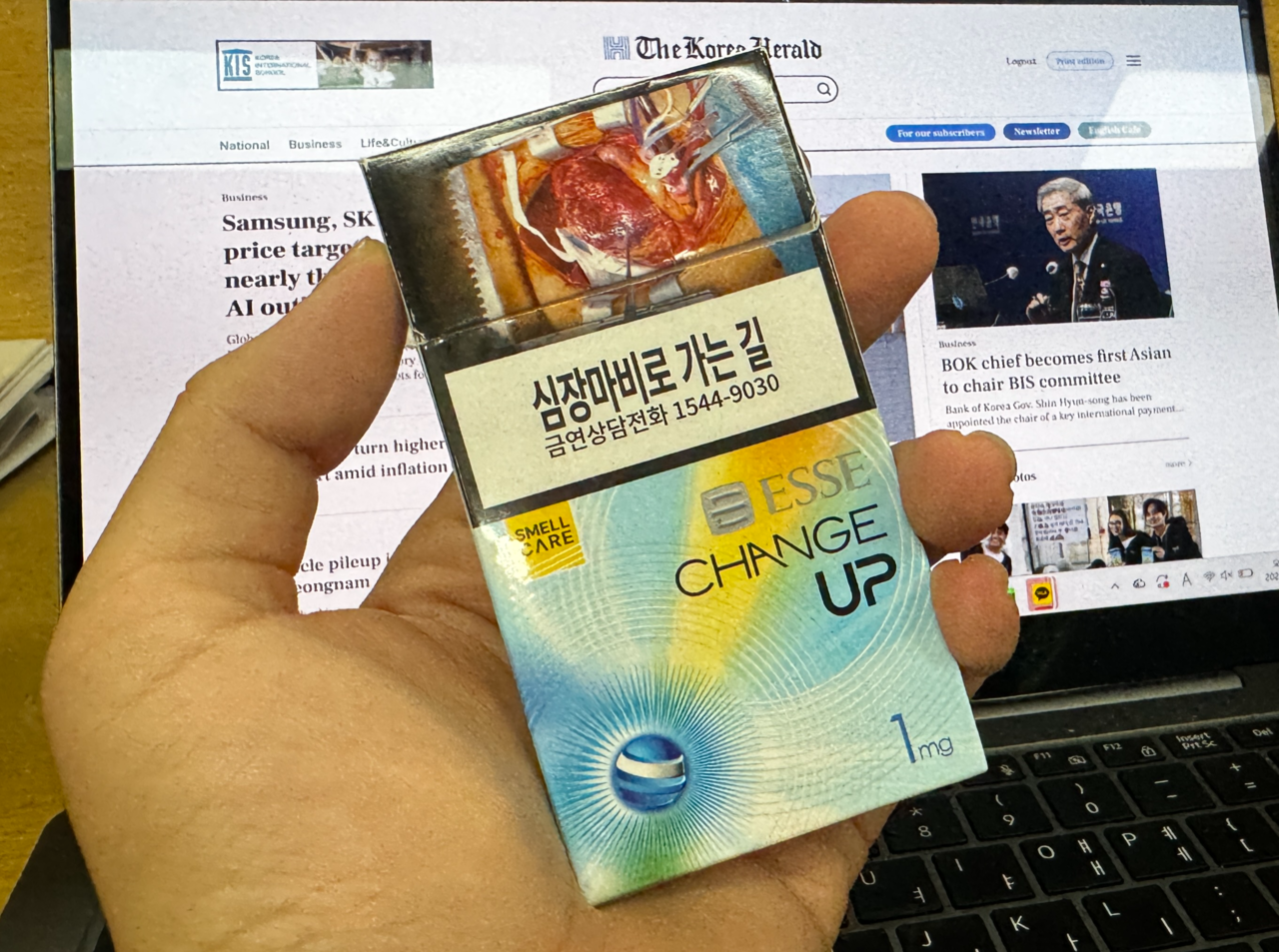
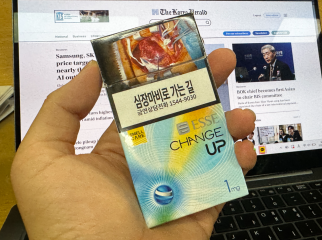
A medical expert has proposed tax hikes that would nearly double the price of a pack of cigarettes from 4,500 won to 8,500 won ($3.40 to $6.40) to curb smoking, reviving the debate over prices here.
Cigarette prices have remained at around 4,500 won since 2015, despite significant increases in the prices of other goods.
Park Eun-cheol, a vice president of the National Academy of Medicine of Korea, made the proposal Tuesday at a forum co-hosted by the academy and the Korean Association of Medical Journalists. He pointed out that cigarettes have become more affordable as the minimum wage and household incomes have risen.
A Health Ministry official at the forum said the government favored measures to reduce smoking that do not involve raising prices. The debate also has implications for public finances, as tobacco taxes and levies help pay for services including firefighting and public health programs.
From 4,500 to 8,500 won
“South Korea's cigarette prices remain among the lowest in the OECD when adjusted for purchasing power parity,” Park said.
According to 2022 World Health Organization data, a pack of cigarettes cost an average of $8.30 in the United States, $12.70 in the United Kingdom and $10.70 in France, compared with $3.50 in South Korea at that year’s exchange rate.
Park estimated that the proposed 89 percent price increase could bring the adult smoking rate down from 17 percent to 14 percent and generate an additional 2.76 trillion won in annual tobacco tax revenue.
Participants also called for broader regulation of newer nicotine products. Lee Sung-kyu, who heads the Korea Center for Tobacco Control Research and Education, said nicotine pouches from KT&G and Philip Morris Korea could enter the domestic market. He also pointed to products such as nicotine strips and toothpicks.
“We need a preemptive regulatory system that is not limited to specific ingredients or product types,” Lee said.
Government keeps its distance
The government’s 2027-2031 plan for managing the health risks of tobacco, announced Oct. 29, did not include a proposal to raise prices.
Technically, the 4,500 won price is a target set by the government, and manufacturers set their own retail prices, but they are limited in doing so as taxes and levies generally make up around three-quarters of the price of a pack.
The previous increase in January 2015 raised the target price of a pack by 80 percent, from 2,500 won to 4,500 won. The increase added 0.58 percentage points to consumer price inflation in its first month.
Opposition lawmakers at the time accused the conservative Park Geun-hye administration of using a public health measure to raise taxes on ordinary consumers. Cigarette sales fell 23.7 percent in 2015 from a year earlier, but opposition lawmakers argued that the decline was modest given the size of the price increase.
The prospect of another increase drew similar criticism under the Moon Jae-in administration in 2021. No increase followed.
Smoking trends have varied by income. According to the Korea Institute for Health and Social Affairs, the cigarette smoking rate among people earning less than 60 percent of the median income rose from 15.48 percent in 2015 to 17.26 percent in 2024, while rates fell in other income groups.
Tobacco taxes and firefighting budgets
The 2015 price increase also helped fund firefighting operations and personnel costs. Taxes on cigarettes include a 594 won individual consumption tax on every pack. Initially, 20 percent that was allocated to the Fire Safety Subsidy, but that share rose to 45 percent in 2020.
Conventional cigarette sales fell from about 3.4 billion packs in 2017 to 2.87 billion in 2024, putting pressure on a subsidy tied to tobacco tax revenue.
Recently, questions have been raised about the long-term sustainability of funding for firefighting services in Korea.
Gyeonggi Province Gov. Choo Mi-ae drew criticism after likening firefighting costs to a "drain on local budgets" during a parliamentary audit in October, pointing out that local governments shoulder the costs even though firefighters are national government employees.
In a September survey of 1,024 adults by the Korea Youth Legislative Policy Association, 77.9 percent supported a 300 won increase in the individual consumption tax on tobacco to offset an expected decline in revenue for the subsidy.
A separate debate concerns how to use the National Health Promotion Fund, which is financed by a levy on tobacco.
At a National Assembly forum Tuesday, a coalition of civic and research organizations proposed using part of the fund for community-based integrated care for older people and people with disabilities.
Researchers at the forum called for periodic increases in tobacco taxation while preserving the fund’s public health purpose.
A Health Ministry official said any increase would require coordination among ministries and public consensus.
forestjs@heraldcorp.com